Time :
2025-12-23 9:45:22Size:
[Large
Middle
Small
]Page View:
|Source
Institute of Laser Microprocessing Technology and EquipmentIn high-precision fields such as aerospace, next-generation information technology, biomedicine, and precision instruments, ultrafast lasers leverage their extremely short pulse widths (femtosecond to picosecond range) and ultra-high peak power to achieve “cold processing” of materials without significant thermal damage. This makes them particularly suitable for intricate engraving and three-dimensional shaping of brittle materials, composites, and difficult-to-machine metals. The integration of multi-axis motion control technology endows the laser beam with flexible spatial scanning and dynamic focusing capabilities, significantly enhancing processing freedom and geometric adaptability. This enables the efficient, integrated machining of complex curved surfaces and irregular microstructures.
Recently, the multi-axis coordinated ultrafast laser precision processing technology concept verification platform—independently developed by Zhejiang Provincial Innovation Center Of Laser Intelligent Equipment Technology (Zhejiang Moke Laser Intelligent Equipment Co., Ltd.)—has completed integrated hardware and software debugging. It has officially entered the process validation phase and is now accepting user-commissioned testing and sample production services. Achieving production immediately upon launch, the platform has swiftly secured its first customer order, demonstrating exceptional market potential!
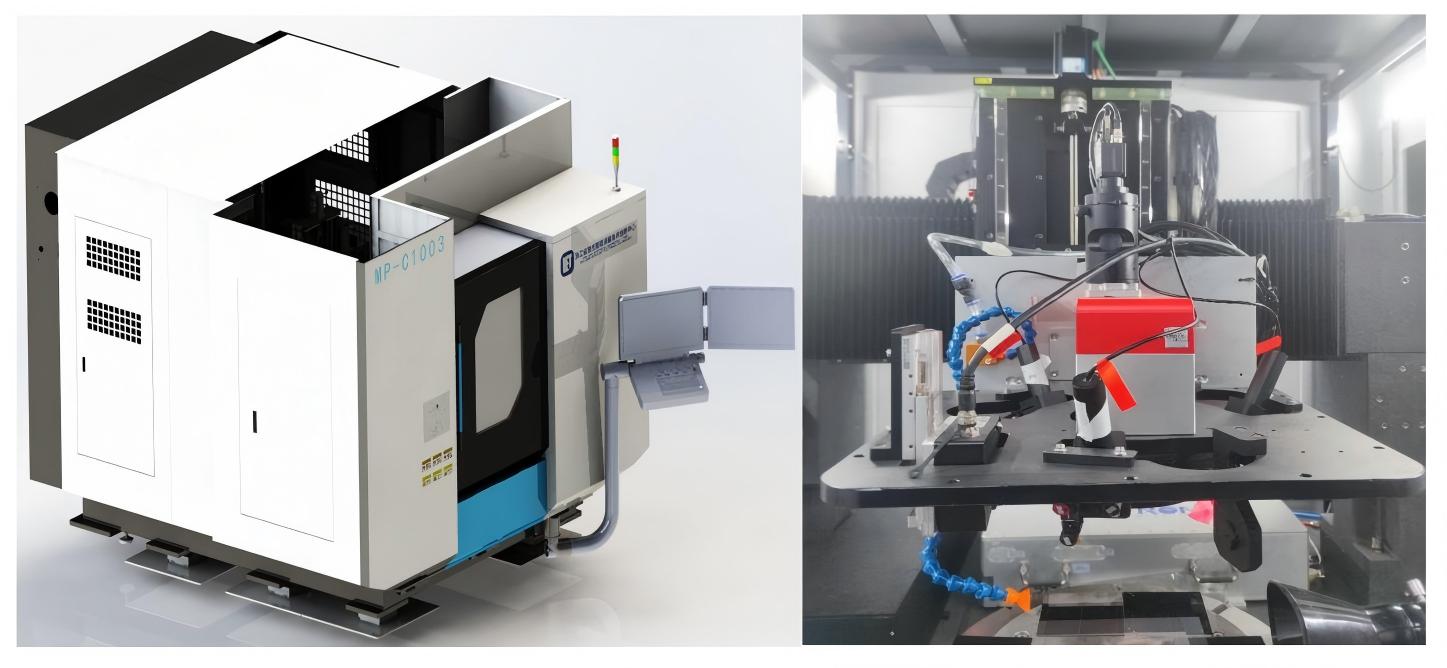
The multi-axis coordinated ultrafast laser precision processing technology concept verification platform holds significant strategic importance for achieving self-reliance and industrial upgrading in China's high-end manufacturing technologies. Currently, in both research institutes and industrial applications of ultrafast laser precision processing technology, high-end multifunctional laser processing heads, precision motion platforms, and intelligent control systems remain heavily reliant on imports.
The center established a multi-axis coordinated ultrafast laser precision processing technology concept verification platform. It independently designed and developed a multifunctional laser micro/nano processing head integrating flexible optical path switching and intelligent focal point control, along with process planning and control system software. Adhering to the “function-module-integration” systems engineering philosophy, this significantly enhanced the scalability of application scenarios and processing capabilities. During development, 11 invention patents were applied for, with 8 already granted, providing intellectual property support for the platform's derivative development of new technologies and equipment, as well as market promotion.
The motion platform comprises three linear axes (XYZ) and two rotary axes (BC), enabling flexible machining of curved workpieces. It integrates a 3D galvanometer and focusing objective lens, achieving dynamic focusing and rapid scanning while maintaining the high precision of direct-write focusing. Equipped with auxiliary components including a laser distance meter, probe, coaxial CCD camera, monitoring camera, and temperature/humidity sensors, it establishes a solid foundation for achieving high-precision machining and ensuring stable operation.
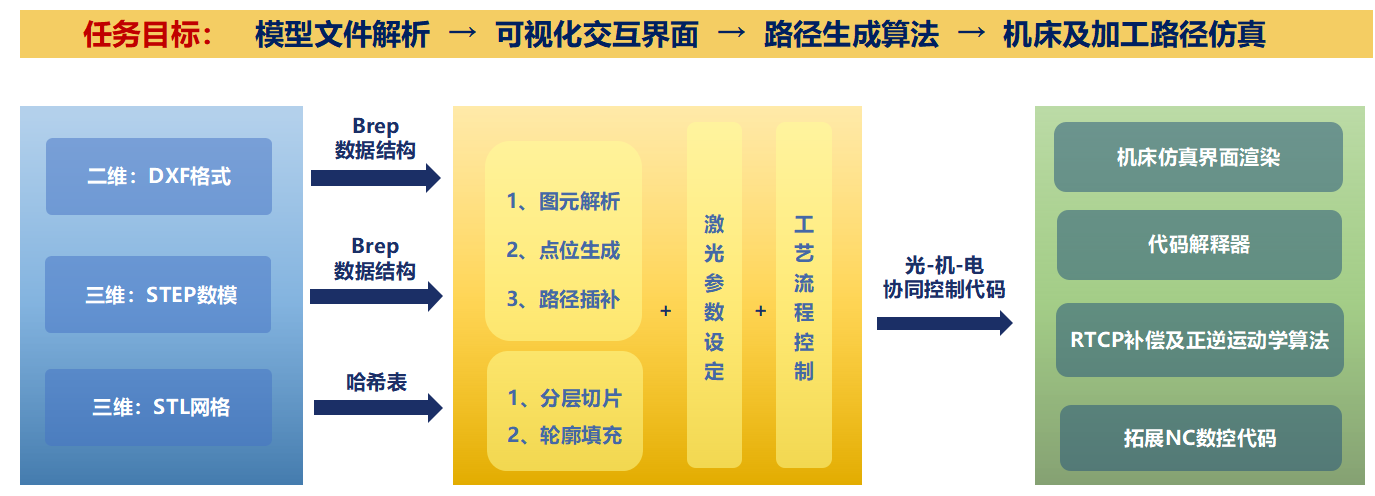
The newly developed multi-axis synchronized ultra-fast laser precision machining process planning and control system software features core functionalities including five-axis simultaneous machining path calculation, RTCP tool tip tracking algorithms, and five-axis forward/inverse kinematics algorithm solutions. It enables CNC code parsing and simulation verification for five-axis machine tools, converting opto-mechanical synchronized tool position files into opto-mechanical synchronized CNC machining codes.
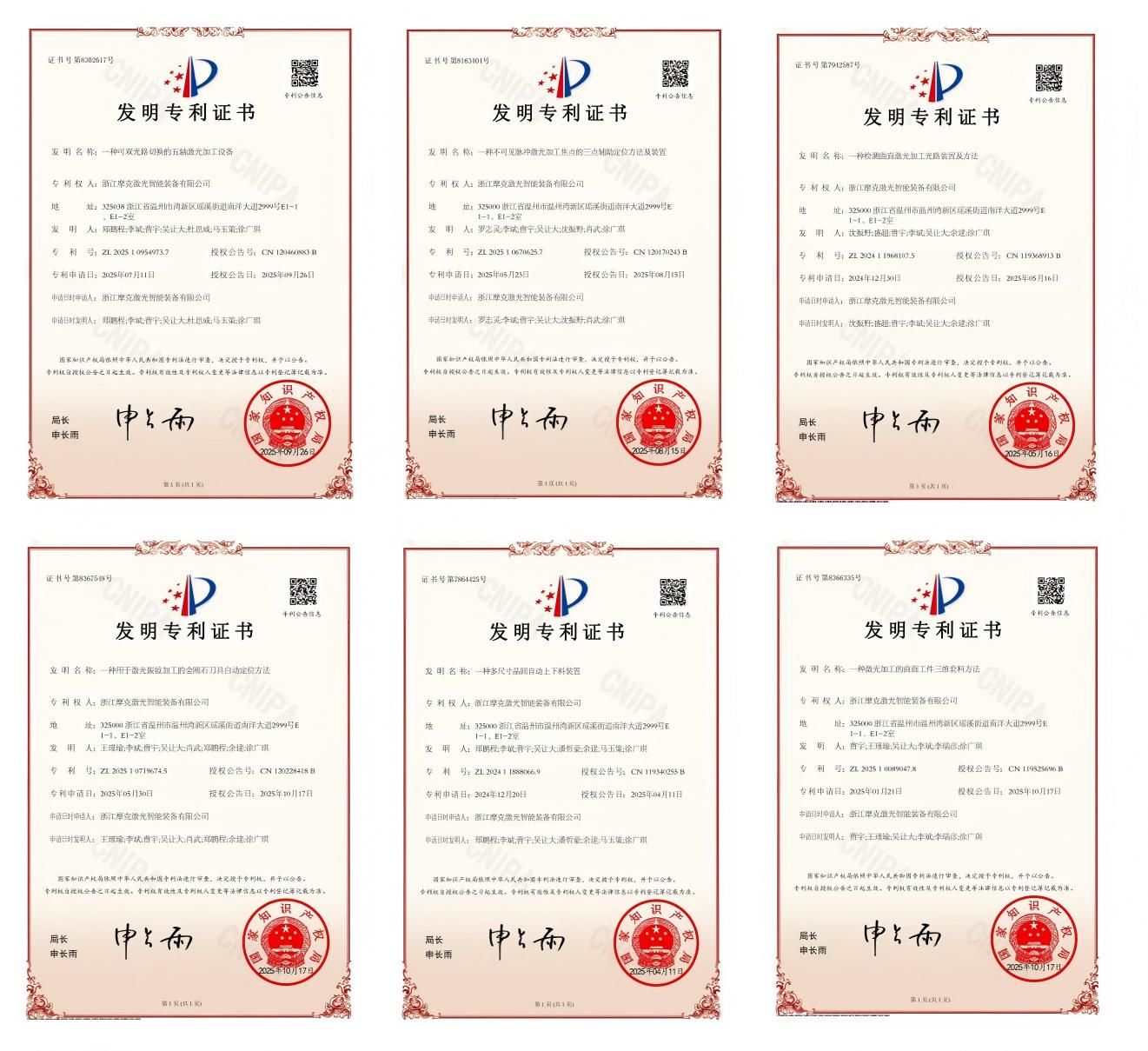
Partial Patent Certificates
The market outlook for multi-axis ultra-fast laser precision machining centers is promising. By 2024, China's market size will exceed 12 billion yuan, while the global market is projected to reach approximately $3.1 billion. The global market is expected to grow to $30 billion by 2030. This technology enables micron-to-nanometer precision machining of hard and brittle materials, semiconductor wafers, and other substrates, meeting the micro-nano manufacturing demands of emerging sectors such as foldable screens, OLED panels, precision structural components for power batteries, and high-end aerospace parts. Market penetration is projected to significantly increase from 2026 to 2030, establishing this technology as a core enabler for the intelligent and green transformation of high-end manufacturing.